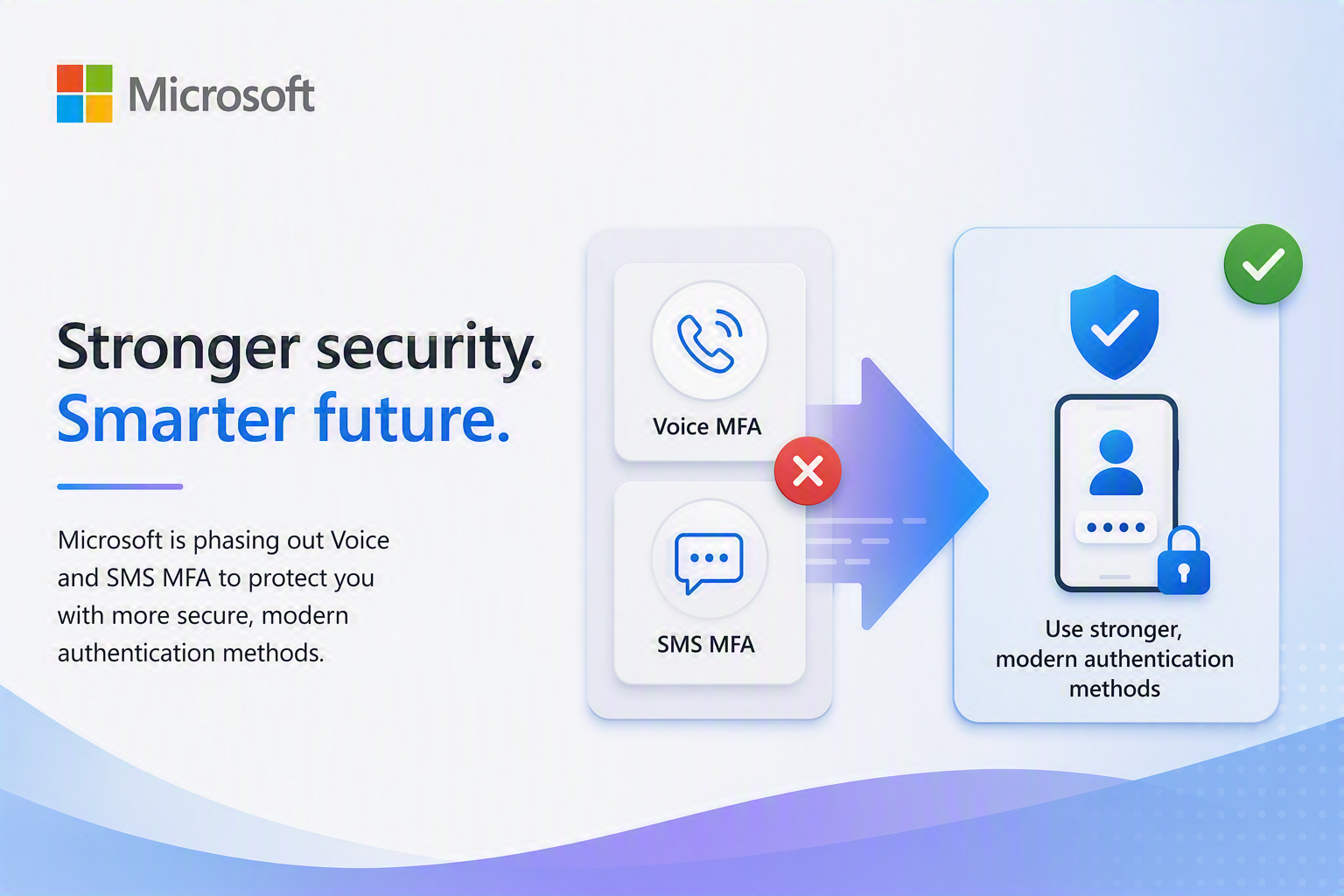
It's important to highlight, that this change isn't immediate. Below is a breakdown of the planned phased-approach from Microsoft.
Cyber criminals are increasingly targeting people rather than technology. While passwords remain a common target, attackers have become highly effective at capturing SMS codes and exploiting voice-based authentication through phishing, social engineering and SIM-swapping attacks.
Microsoft's own telemetry shows that traditional authentication methods are becoming less effective against modern attack techniques. As a result, the company is encouraging organisations to adopt phishing-resistant authentication methods such as passkeys, Microsoft Authenticator and FIDO2 security keys.Unlike SMS or voice-based MFA, passkeys are tied to a trusted device and use cryptographic verification. This means there is no code to intercept, steal or trick users into revealing, significantly reducing the risk of account compromise.

SMS and voice MFA were originally introduced to improve security beyond passwords. However, as attackers have adapted their techniques, these methods no longer provide the level of protection required against today's threats. Passkeys and phishing-resistant authentication methods offer a stronger, simpler and more secure alternative.
A passkey is a modern, phishing-resistant way of signing in that removes the need for SMS codes, voice calls and, in many cases, passwords altogether. Instead of receiving a code and typing it into a login page, you verify your identity using something you have or something you are, such as Face ID, Windows Hello, a fingerprint, your mobile device or a FIDO2 security key.Behind the scenes, passkeys use cryptographic keys stored securely on a trusted device to prove your identity. Because there is no one-time code to enter, intercept or share, passkeys offer significantly greater protection against phishing, social engineering and account compromise attempts.
Choose the passkey that works best for you
If your organisation currently uses SMS or voice-based MFA in Microsoft 365, whether as a primary or backup authentication method, these changes are likely to affect your users. The good news is that there is plenty of time to prepare, and taking action now can help ensure a smooth transition before Microsoft retires these authentication methods.
If you'd like help assessing your current setup or planning a passkey rollout, Central IT Solutions can help.