In today’s hybrid work environment, businesses need secure, flexible, and cost-effective solutions to provide remote access to essential applications and data. Microsoft Azure Virtual Desktop (AVD) is a game-changer, offering a modern alternative to traditional remote desktop solutions like Remote Desktop Services (RDS).
With its pay-as-you-go model, enhanced security, and scalability, AVD is the ideal choice for businesses looking to streamline IT operations and improve workforce productivity.
What is Azure Virtual Desktop?
Azure Virtual Desktop is a cloud-based desktop and app virtualization service that allows businesses to provide remote access to Windows desktops and applications from anywhere, on any device. Unlike traditional RDS environments, AVD is fully managed by Microsoft, reducing the burden on IT teams and offering superior performance, security, and cost efficiency.
Key Benefits of Azure Virtual Desktop
1. Cost-Effective Pay-As-You-Go Model
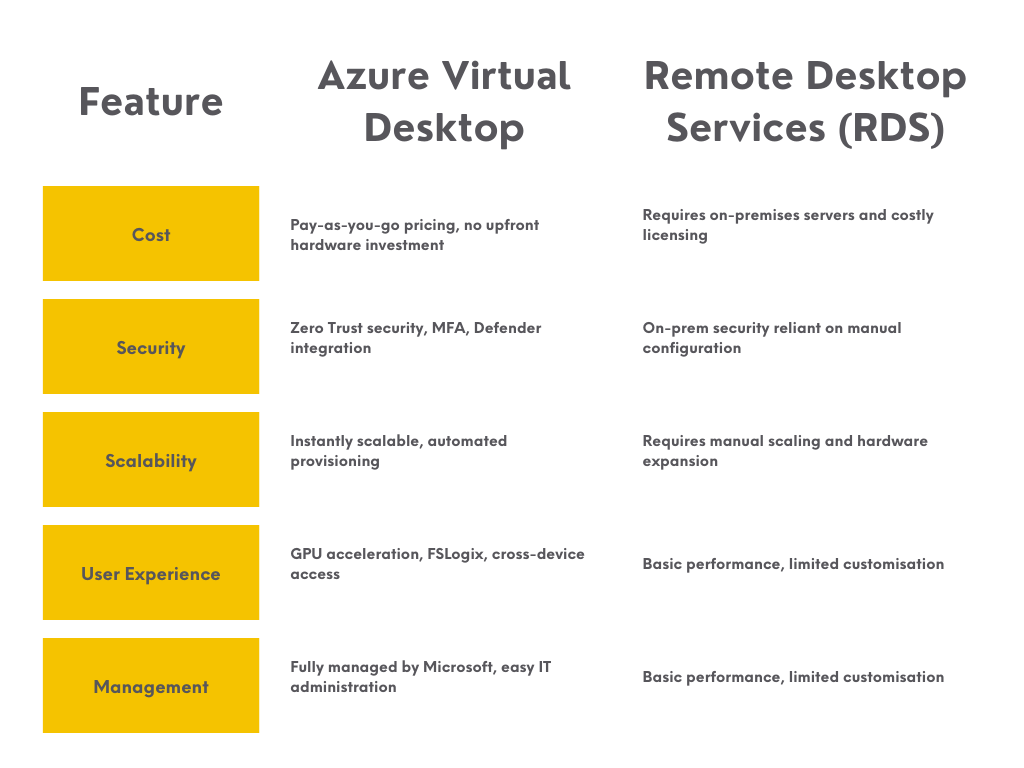
One of the standout features of AVD is its flexible, consumption-based pricing. Unlike traditional RDS environments that require heavy upfront investments in hardware and licensing, AVD operates on a pay-as-you-go model, meaning businesses only pay for the resources they use. This reduces overall IT expenses and allows for better budget control.
2. Enhanced Security & Compliance
Security is a top priority for any organisation, and AVD is designed with advanced security measures to protect data and applications. Benefits include:
- Built-in Multi-Factor Authentication (MFA) – Ensures secure access to virtual desktops.
- Zero Trust Security Model – Minimises attack surfaces with least-privilege access controls.
- Integration with Microsoft Defender for Endpoint – Provides advanced threat detection and response.
- Data Remains in the Cloud – Unlike traditional RDS environments where data resides on on-premises servers, AVD ensures that sensitive data never leaves the cloud, reducing the risk of data breaches.
3. Superior User Experience
Azure Virtual Desktop provides a seamless and responsive user experience, even in low-bandwidth environments. Features such as GPU acceleration and FSLogix profile containers enable faster load times and smooth performance for resource-intensive applications. Users can access their desktops from any device, including Windows, macOS, iOS, and Android, enhancing flexibility and mobility.
4. Scalability and Flexibility
AVD allows businesses to scale up or down based on workforce demand. With automatic scaling and session-based desktops, businesses can optimise resource usage and avoid unnecessary costs. This is particularly beneficial for seasonal businesses or companies with fluctuating workloads.
Conclusion
Azure Virtual Desktop is a next-generation remote work solution that provides businesses with cost-effective scalability, robust security, and an exceptional user experience. With its pay-as-you-go model, organisations can reduce IT costs while delivering secure, high-performance remote desktops to their workforce.
If your business is still relying on legacy RDS solutions, now is the time to consider migrating to AVD. Contact Central IT Solutions Ltd today to learn how we can help you transition seamlessly to Microsoft Azure Virtual Desktop.